Wednesday, 2 April 2014

HAWFINCH AND BAIKAL TEAL

28th-30th March.

I started by looking for Goshawks at a site in Norfolk and it wasn't long before we had our first sighting. I had been told that the best time was between 9am and 10:30am and right on cue two appeared and flew East. Staying on site till 10:30am did give a further two sighting's but as they were not seen at the same time it's not possible to say that they were 4 different individuals.


Next stop was Lynford Arboretum were I was greeted by two singing, flighty Firecrest's and an equally chirpy Colin Wills. The target birds were Firecrest, which was seen in the car park as soon as pulled up, Hawfinch and Two-barred Crossbill. The Hawfinch have been seen under the feeding area near the entrance to the arboretum.


Now, to me it doesn't matter how many Hawfinch's you see, they always take your breath away as they are just such stunning birds. We had 6 in total seen at the same time and I manged to digiscope the images included here. The light was not great so I was extremely pleased with the results.


Two-Barred Crossbill were found a little further into the arboretum. There has been lots of talk and controversy regarding these birds with many discounting some individuals. The tertials white tips ware but length and shape remain. My opinion is that they are Two Barred, even the one with the lesser bars pictured at the top here. The lower bird is a complete stonker.


Cavenham Heath was going to be my last stop to see Stone Curlew until a certain mega alert re a Duck at Fen Drayton Lakes RSPB drew my attention, which we will discuss a little later. There were 6 Stone Curlew seen on the Heath early morning although I only managed to see 5. Always very distant and perfectly camouflaged when siting still. The warm sunshine that had developed in the afternoon was adding to the difficulty getting decent images, the heat haze causing much distortion. This is the only recognisable digiscoped image obtained.
 
 
The mega alert that I had had earlier was then really brought to the forefront of my mind by means of a phone call from a good friend Ron Cousins. He was already on site and had seen the BAIKAL TEAL, texting me "It looks good and has no rings". I left the Heath and dashed to RSPB Fen Drayton Lakes. Arriving to see Ron waiting for me, he helped to point me in the right direction before having to go off.
 
 
Whilst walking down a few birders were walking back and they stopped to tell me "Its flown off round the spit and can't be seen from the hide, it may have landed down the western end". My heart did sink a little but I carried on and completed the long walk to the far south western tip of the lake in record time. I was very happy to relocate the bird there sunning its self on the bank with several Wigeon obtaining these images, again digiscoped.
 
 
Now wether this bird is a genuine vagrant is debatable and I'm sure there will be people who believe in both views, genuine and escape. The bird is fully winged and has no rings so it may well get excepted. If it stays all summer it will be less likely to excepted by the powers that be, but its in beautiful plumage and is worth going to see.
 
All in all another absolutely cracking days birding.


Monday, 17 March 2014

GREAT SPOTTED CUCKOO

Thursday 13/03/14
Another rare day off, well thats what some of my friends seem to say to me. I don't really know what that mean? @;^) but this was a great little journey.


Alarm set for 4am I finally hauled myself up, got fed and watered and headed out by 4:45am. A long drive to Pembrokeshire in Wales for a GREAT SPOTTED CUCKOO. Arriving at around 9:15am, a good friend of mine Paul Hackett was already there and on the beach looking at the bird. As I dashed along the sand following Paul's directions towards the small gathered crowed, I noticed them slowly packing the scopes up and closing the legs on their tripods. My heart sank a little as I knew that the bird had flown.


As they came closer they confirmed that the bird had indeed flown and must have flown right past me. I of course was head down, heart racing heading towards them. It was thought to have flown over the small ridge and drop into the scrub there. However this was not the case.


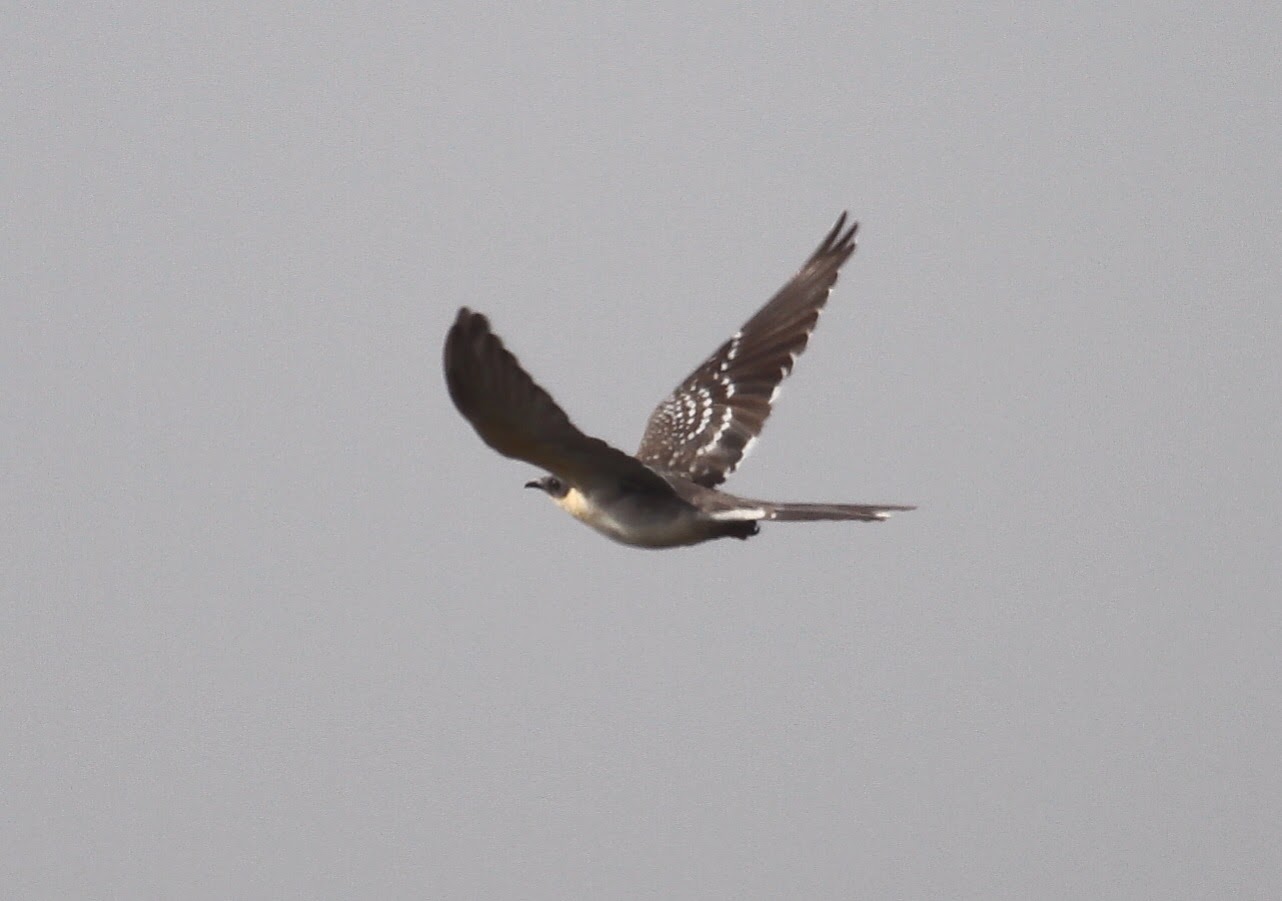
My heat ache was short lived as we caught up with bird on the golf course and watched it feeding really well. It took around 6 large grubs/caterpillars in the first 5 mins we watched it. This bird really did bring me great joy, an absolute stunner. It was lady's day on the golf course and its was quite busy, this I think helped as the bird was moving around a lot, offering great but sometimes distant views.


The Images I did obtain, included here, were a mixture of iPhone/scoped ground shots and some in flight shots with my Canon camera.


Again, another thoroughly enjoyable day out and great to spend the hrs with Paul Hackett who's is a gent and always has the birds welfare at heart.


Thursday, 27 February 2014

AMERICAN COOT AND CAPERCAILLIE

A trip up north for the AMERICAN COOT at Loch Flemington was a great chance to spend a few days up in delightful Scotland, a place I've not birded for many years.


Day 1-2: Leaving on Saturday morning at 11:30am, driving the 535 miles from my house and arriving at around 7:30pm at Boat-of-Garten, I managed to book into the Boat hotel. First thing on the agenda for the morning was the Coot. Only 36 miles from where I was staying and on arrival I was greeted by Pete Morris and Alan Lewis. Amazing how you can bump into people you know in the wildest of places. The weather was poor with these being the best and only images of the AMERICAN COOT I could obtain. These were taken with the iPhone and scope and in the extremely dull wet conditions.


After I had had my fill of the Coot I then took the short drive to Loch Garten where my target bird was Crested Tit. A bird I've seen before but had never been able to get any decent photos of. As Tits go this has to be the finest on our shores, although confined to the Pine Forests of the extreme north. Another target species was Scottish Crossbill but I was unable to locate any in the usual haunts. The Crested Tit was an absolute joy to see and really great to finally get some decent images of this charming little bird.


The area was good for many species including Great Tit, Blue Tit, Coal Tit, Chaffinch and the wonderful Tree Creeper.


Day 3: I was planning to tackle the Findhorn Valley but the low cloud and rain put pay to that. Although I have since heard from a friend that both Golden Eagle and White-tailed Sea Eagle were seen that day. I however drove out to a known site for Black Grouse only to find that the field that they had fed in previously was no longer as they required it. No sign of the birds at all. I did see an immature Golden Eagle on the mountain pass near Dirdhu, which was a great bit of luck. The only grouse on offer was the rather glorious Red Grouse.


My next target was Capercaillie, a real beauty and sadly declining grouse. I had been given some infomation by a friend of mine Christopher Bridge. I was unlucky on the morning of my visit but I know three were seen the following morning, due to a call from another good friend Paul Hackett and in the very spot Chris had mapped out for me. I went to another location later that afternoon and was totally amazed and privileged to get the selection of images below.


The most amazing, exhilarating, scary and truly a wonderful experience. Certainly one of the top highlight's of my birding years. I've seen Capercaillie before but never managed great views like this. Sadly the Capercaillie, according to the RSPB are down to less than 280 individuals. We really must try to do what ever we can to save this our largest and possibly the most beautiful of all grouse.
 
 
Day 4: Was final days birding and was a morning looking at Black Grouse at Tulloch Moor and then on to Caingorm and unfortunately failing to locate any Ptarmigan. A nice addition to the list of sightings was this beautiful Roe Deer that stared at me for at least 3mins before deciding it may be best to depart back into the deepest parts of the Forest.


All in all, a great few days. I do hope to go back to wonderful Scotland before the end of May this year, fingers crossed.


Monday, 10 February 2014

YELLOW-RUMPED WARBLER

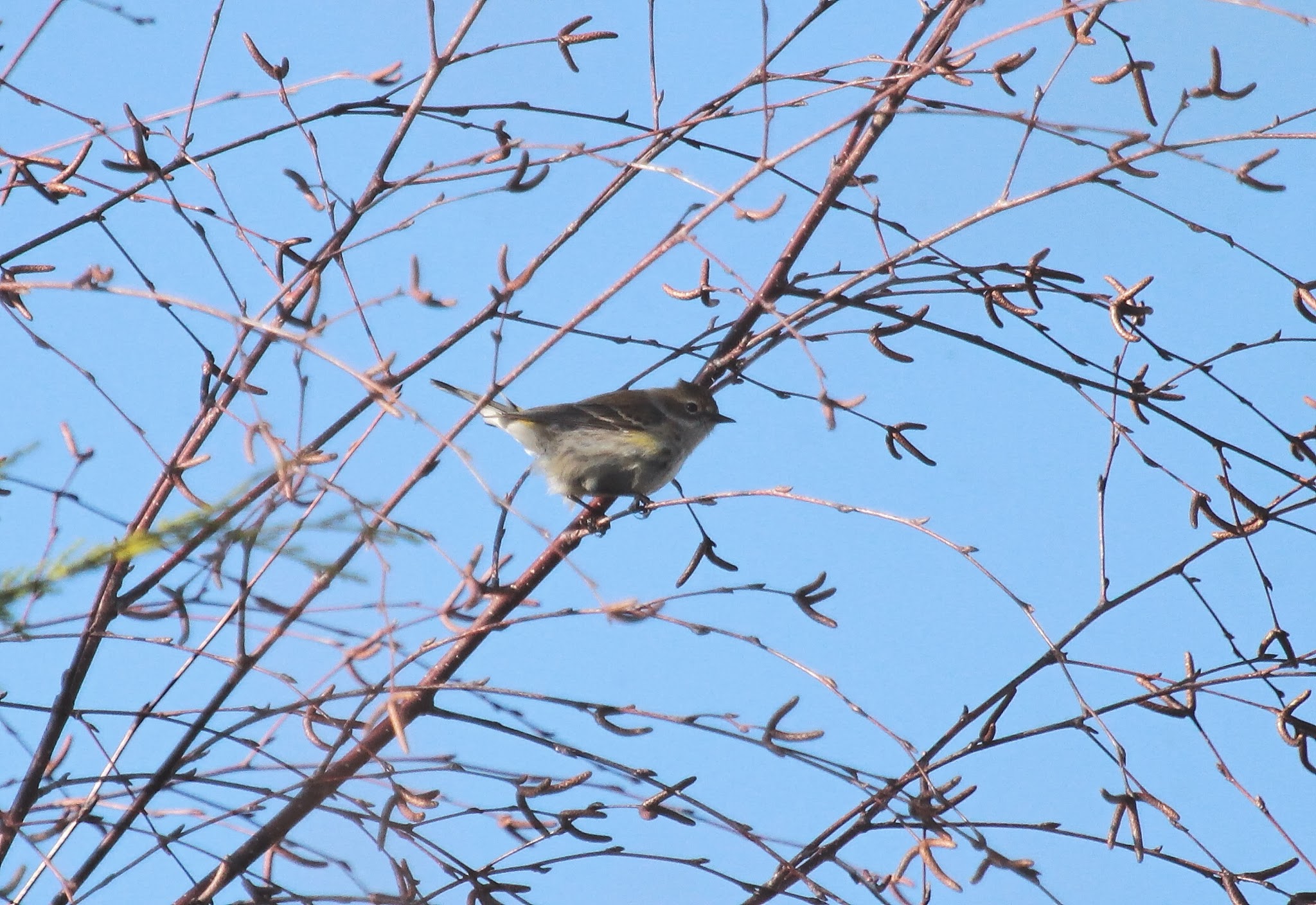
What a turn up! YELLOW-RUMPED WARBLER a short 4hrs drive away at the beginning of Feb. Birding never fails to amaze and astound.

(Great information from Birdguides)
 

Site: Junction of Whitwell Acres and Apperley Avenue, High Shincliffe, Durham. Parking just inside Whitwell Acres in the dead end area.


Waypoint 247 above is the area where the feeders are. On the corner of Whitwell Acres and Apperley Avenue there is a large green with some Lime trees on, the best place was to stand here and look towards the feeders. They are placed, looking at the outer line of trees, to the right of the lamp column, lowdown between the next two trees. Early morning means you are looking straight into the sun, but of course the sun soon moves round.


Waypoint 249 is another area the bird seemed to favour. The trees are within the back garden of a property. The urge was to follow the bird all round the estate but really the best place was the two areas above. It was seen in some Pines and other trees around the estate but all the photos I got were in the usual areas and in time, with patience, it always returned.
 
 
Great to see Nick Franklin who I've not seen since the Bridled Tern, who is real gent and brilliant birder. I'm also expecting to see some great digiscoped images as a friend, Paul Hackett was on the prowl and his digiscoped images are second to none. Also great to catch up with David Campbell who I'd not seen since the BrĂ¼nnich's Guillemot.


Also there were three Waxwings within the same estate. Waypoint 251 is the Rowan tree where the Waxwings frequent.


As all the bird apps and pagers say, please do respect the residents, it must be a bit of a shock to see the hundreds of birders on the estate. It's tempting just to stop in the middle of the road when the bird's flitting about and this was the cause of a few resident complaints. Also when they came up against the birders blocking the road, of course they beeped the horn and the bird flew off. So it will be of benefit to all sides @;^) (especially ours)